


Trending Topics

Pregnant woman holding prescription medication, illustrating pregnancy category D medication risk and decision-making during pregnancy.
Detox

Pregnancy Category D: Meaning, Typical Risk Framing, and Common Questions

“Pregnancy category D” can be scary to see on a medication list. You may also see the same idea written as pregnancy class D. In the older letter system, Category D means fetal risk has been seen in humans, but a doctor may still use the drug when the benefit is greater than the risk.

This guide explains the meaning of pregnancy category D, how the risk is usually described, and how it compares with pregnancy class C and pregnancy category X. It is for education, not medical advice. If you are pregnant, planning pregnancy, or breastfeeding, talk with your OB-GYN and your prescriber before you change any medicine.

If alcohol or drug use is part of the picture, do not try to make major changes alone. Support can protect both you and your pregnancy.

Read More »
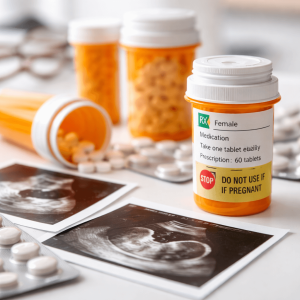
Prescription medication bottles next to ultrasound images highlighting pregnancy category X drug risks and medication safety during pregnancy.
Detox

Pregnancy Category X Drugs List: What “X” Means and What to Ask Your Doctor

If you searched for a “pregnancy category x drugs list,” you likely want one clear answer: Is this medicine safe in pregnancy? In the older FDA letter system, Category X was the highest-risk label, meaning the drug should not be used in pregnancy because fetal risk is known and the risk outweighs any possible benefit.

One important update is that the FDA no longer uses the A, B, C, D, X letters on new prescription drug labels, and the newer format explains pregnancy risk in plain language with a short risk summary and the facts behind it. That is why you may see “pregnancy category X” in older sources but not on many current labels.

Read More »
Pregnant woman calmly reviewing her buspirone prescription while seated at home, representing careful anxiety management during pregnancy.
Detox

Buspirone and Pregnancy: Safety, Pregnancy Category, and Breastfeeding FAQs

Searching “buspirone and pregnancy” often means you’re trying to balance two real needs: feeling stable enough to function and protecting your baby. Buspirone (also known as Buspar) is a prescription medicine for anxiety. It is not a benzodiazepine, and it is not meant to be used as a quick “rescue” pill.

Below you’ll find plain-language guidance on buspirone during pregnancy, what “buspirone pregnancy category” means, and what to know about buspirone and breastfeeding. This is educational information, not personal medical advice. Your OB-GYN, prescriber, and pediatrician are the right team for an individualized plan.

Read More »
Pregnant woman reviewing pregnancy medication categories with a healthcare provider while holding prescription pills
Detox

Pregnancy Medication Categories (A/B/C/D/X): What They Mean

Many people run into pregnancy medications categories like A, B, C, D, and X while researching prescriptions, mental health meds, or withdrawal support during pregnancy.

These letters can look simple, but they are easy to misunderstand. This guide explains what each category means, what it does not mean, and what the FDA uses now instead.

This article is educational and not medical advice. If you are pregnant (or could be), review every medication decision with a qualified clinician.

Read More »
Woman experiencing intense overthinking and anxiety, illustrating the emotional strain often linked to rumination disorder and substance use.
Addiction

Rumination Disorder, Anxiety, and Addiction: When Overthinking Fuels Substance Use

Rumination can mean very different things in medicine. For some people, it describes mental “overthinking” that loops the same worries over and over. For others, rumination disorder is a feeding and eating disorder where food comes back up from the stomach to the mouth after meals. Both forms can create intense distress, raise anxiety, and, for many, become tangled up with substance use.

This guide explains how rumination, anxiety, and addiction interact, what rumination eating disorder is, and how rumination disorder treatment can support long‑term recovery.

Read More »
A man in early sobriety sitting in a quiet living room, reflecting on day 10 with no alcohol and experiencing emotional withdrawal.
alcohol abuse

Day 10 With No Alcohol: What to Expect Physically and Emotionally (and When to Get Help)

Day 10 with no alcohol is a big milestone. You are far enough from your last drink to notice real changes, yet close enough that withdrawal and cravings may still feel intense. For some people, day 10 feels amazing. For others, it feels like “I made it this far, but I’m exhausted and still want to drink.” Both experiences are common.

What you feel today depends on how much and how often you drank, your overall health, and whether your detox was medically supervised. If you stopped heavy daily drinking on your own, day 10 can still feel rough and even risky. If you completed a supervised detox and are now in rehab or outpatient care, you may be more stable but still emotionally raw.

Read More »
Call Now Button