
Drug & Substance Guide
Behavioral Addictions: Types, Signs, Causes & Evidence‑Based Treatment
Admissions answered 24 hours a day · Free and confidential
Excellent 4.6 out of 5 434 Google reviews across our locations

What clients say
Trusted by clients across Texas
4.6 from 434 Google reviews across 9 locations
Across Nova Recovery Center, Briarwood Detox Center and Eudaimonia Recovery Homes
★★★★★
“Nova is far from perfect, and some of the information can be misleading. But if you want to cover the 12 Steps while enjoying good food and a beautiful scenic view, this is the place for you. The…”
10 months ago · Wimberley
★★★★★
“I did 90 days at Nova Recovery 6 years ago. I am still sober today. And living a life I could have never imagined. The people and the program they are running impacted me for a lifetime. Better than…”
2 years ago · Wimberley
★★★★★
“I went to Nova almost 9 months ago and I wouldn’t change it for the world. The staff when I first entered were very nice and welcoming. As a 19 year old that didn’t know what I was getting myself…”
2 years ago · Austin
★★★★★
“Nova Recovery Center has been an invaluable part of my journey to sobriety. The intensive inpatient program, coupled with the unwavering support and guidance from my recovery specialist, Mark Rector…”
2 years ago · Austin


★★★★★
“I had such a positive experience at Nova Recovery in Wimberley! The staff genuinely cares and went above and beyond to support me every step of the way. The peaceful setting made it easier to focus…”
a year ago · Wimberley
★★★★★
“I love Nova so freaking much. Nova has saved my life in more ways than one. I was hopeless and had no solution suffering from this disease. The staff there never gave up on me. I was the worst client…”
2 years ago · Austin
★★★★★
“I know Mark rector is non-binary however it saved my life and it did a good job with CPR and I don't know how aside from staying sober I could ever repay it thank you Mr or Mrs or whatever you're…”
8 months ago · Austin
★★★★★
“It's been a few years since I was a patient at Nova Recovery Center. Recently I have been reflecting on my time there and how incredibly grateful I am for the experience I had. I have been to 7 rehab…”
2 years ago · Austin


Exceptional standards, backed by credible organizations
Our affiliations and accreditations

Behavioral addictions Overview at a Glance
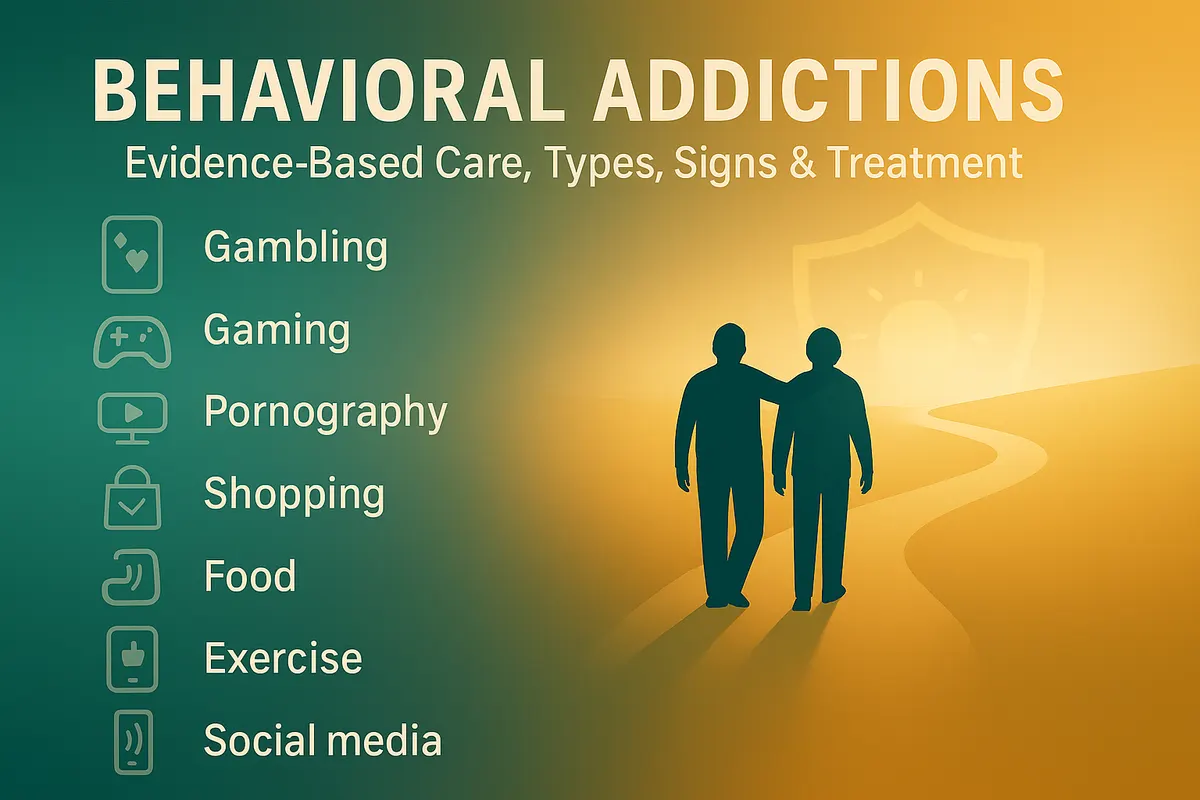
Behavioral addictions (also called process addictions) involve compulsive engagement in rewarding activities (such as gambling, gaming, pornography/compulsive sexual behavior, shopping, food/binge eating, exercise, work, and social media/phone) despite negative consequences.
In DSM‑5/DSM‑5‑TR, gambling disorder is the only diagnosable behavioral addiction; internet gaming disorder (IGD) appears in Section III for further study. ICD‑11 (WHO) recognizes gaming disorder.
Signs include loss of control, preoccupation, tolerance‑like patterns, withdrawal‑like emotions when unable to engage, secrecy, chasing losses, and life impairment.
Effective care uses cognitive behavioral therapy (CBT), motivational interviewing (MI), dialectical behavior therapy (DBT), family involvement, support groups (e.g., SMART Recovery, 12‑step fellowships), and, when indicated, levels of care (residential, IOP, outpatient).
What behavioral addictions are
Only one behavioral addiction is a diagnosis. The DSM-5 recognizes gambling disorder and puts internet gaming disorder in Section III for further study; the WHO's ICD-11 recognizes gaming disorder as well.
Everything else on this list, whether shopping, pornography, food, exercise, work or the phone, is a real pattern without a diagnostic code. The signs are the same across all of them: loss of control, preoccupation, needing more of it, and feeling the absence of it. This page covers the types, the signs, the causes, and the treatments with evidence behind them.
- Also called
- Process addictions
- Diagnosable today
- Gambling disorder only, in DSM-5-TR
- Recognized by the WHO
- Gaming disorder, in ICD-11
- Effective care
- CBT, motivational interviewing, DBT, family, groups
The signs, the causes and the treatment options are set out below, and the call is confidential.



Are behavioral addictions recognized clinically? (DSM‑5 vs. ICD‑11)
DSM‑5/DSM‑5‑TR (American Psychiatric Association) places non‑substance/behavioral phenomena in the category “Substance‑Related and Addictive Disorders,” but at this time only recognizes gambling disorder as a formal behavioral addiction diagnosis. Internet gaming disorder (IGD) is listed in Section III as a condition for further study, with proposed criteria (e.g., preoccupation, tolerance, withdrawal‑like affect, deception, loss of interests, continued use despite problems, jeopardized relationships/work/school).
ICD‑11 (World Health Organization) includes gaming disorder under “Disorders due to addictive behaviours,” alongside gambling disorder.
Leading clinical resources emphasize that many behaviors can be problematic even if they don’t have a stand‑alone DSM diagnosis, impairment and distress still warrant care.
Common types of behavioral addictions
Below are the behavioral addictions (and closely related conditions) most often discussed in clinical and public health literature. Where relevant, we note DSM‑5/ICD‑11 status and hallmark signs.
Gambling addiction (Gambling disorder)
- Clinical statusRecognized as a behavioral addiction in DSM‑5/DSM‑5‑TR and ICD‑11.
- Signspreoccupation with betting; chasing losses; escalating wagers; lying/secretive behavior; jeopardized relationships/career/finances. Triggers often include stress, loneliness, and mood shifts.
- TreatmentCBT for gambling cues and cognitive distortions (“near misses,” magical thinking), money/budget safeguards, blocking software, financial counseling, support groups, and when appropriate, higher levels of care.
Gaming & internet gaming disorder
- Clinical statusIGD is in DSM‑5‑TR Section III for research; ICD‑11 recognizes gaming disorder.
- Signspreoccupation; irritability/anxiety when prevented from gaming; needing more time (tolerance‑like); failed cut‑down attempts; lost interests; continued play despite problems; deception; use to relieve low mood; jeopardized work/school/relationships.
- TreatmentCBT/MI (time management, triggers, replacement activities), family therapy (especially for adolescents/young adults), digital hygiene, and structured step‑downs in screen time with accountability tools.
Pornography use problems & compulsive sexual behavior
- Clinical statusWhile pornography addiction is debated in DSM nomenclature, ICD‑11 recognizes Compulsive Sexual Behaviour Disorder (CSBD) as an impulse control disorder. Clinically, many services treat “porn addiction” concerns under CBT/CSBD frameworks.
- Signsescalating use; difficulties stopping; secrecy/deception; preoccupation affecting intimacy; using porn to self‑soothe stress, shame, or loneliness; and functional impairment at school/work or in relationships.
- TreatmentCBT/DBT for urges/emotion regulation, trauma‑informed therapy when indicated, couple’s work for relationship repair, tech filters/accountability, and mutual‑help fellowships.

Shopping/compulsive buying
- StatusOften framed as compulsive buying disorder; not a standalone DSM addiction diagnosis. Wikipedia
- Signsimpulse buying; chasing the “rush” of purchases; financial fallout; hiding packages/debt; shopping to relieve distress.
- TreatmentCBT, financial boundaries (cash‑only, card limits), blocking promotional triggers, and support groups.
Ready to take the next step?

Food addiction & binge eating–like patterns
- Status“Food addiction” is debated; binge eating disorder is a DSM‑5 diagnosis (feeding/eating disorders). Clinically, many people present with an addiction‑like relationship with ultra‑palatable foods.
- Signsloss of control; eating beyond fullness; secrecy or shame; using food to change mood; repeated unsuccessful cut‑downs.
- TreatmentCBT‑E (enhanced CBT for eating disorders), nutrition support, medical management, and therapy for co‑occurring mood/anxiety or trauma.

Social media/phone/internet overuse
- StatusGeneral internet addiction isn’t a DSM diagnosis; debate continues. Gaming disorder is recognized in ICD‑11; social media overuse may be conceptualized under problematic internet use.
- Signscompulsive scrolling; sleep disruption; shame after binges; conflict about device time; “phantom” notifications; reduced in‑person activities.
- TreatmentCBT, digital hygiene (app limits, no‑phone zones), replacement activities, and accountability supports.
Important: Even when a behavior doesn’t have a formal diagnostic label, impairment and distress are enough to seek help. Early intervention shortens suffering and protects relationships, health, and work/school functioning.
We accept most major insurance
Most major insurance covers treatment here
We'll check your benefits for free and tell you what you'd actually pay, before you commit to anything.













Takes about 2 minutes · No obligation · Or call (512) 605-2955
Don't see yours? We work with more plans than we can show here.
VERIFY YOUR INSURANCE | 100% CONFIDENTIAL

Causes & risk factors
Behavioral addictions arise through interactions of biology, psychology, and environment:
- NeurobiologyBehaviors that reliably change mood can activate reward circuitry and learning pathways; repetition strengthens the habit loop.
- Genetics & family historyVulnerability can run in families, similar to substance addictions.
- Stress & traumaPeople may use behaviors for relief or escape.
- Co‑occurring mental healthMood disorders, anxiety, ADHD, OCD‑spectrum traits, and trauma can increase risk and complicate recovery.
- Access & triggers24/7 availability (online betting, phones, streaming) lowers friction and increases exposure.

Signs & symptoms
Not all intense engagement is addiction. Passion becomes a problem when you notice:
- Loss of controlrepeated unsuccessful cut‑downs; spending more time/money than intended.
- Preoccupationconstantly thinking about the behavior or planning the next opportunity.
- Tolerance‑like patternsneeding more intensity/time/spend to get the same effect.
- Withdrawal‑like emotionsirritability, anxiety, restlessness, low mood when not engaging.
- Chasing losses / escalation (gambling, shopping)trying to “win it back,” buying to feel okay.
- Secrecy & deceptionhiding devices, statements, or time.
- Role impairmentslipping grades, missed deadlines, damaged relationships, financial/legal problems.
- Using to copeturning to the behavior to manage distress rather than solving problems or seeking support.
If you’re unsure, a professional screening can help you decide the next step.
Behavioral vs. substance addictions
Similarities: reward learning, impaired control, cravings, continued use despite harm, and high co‑occurrence with other mental health conditions.
Differences: substances can create physiological dependence and medical withdrawal syndromes; behavioral addictions center on activities but can still produce withdrawal‑like affect, significant impairment, and relapse cycles. Importantly, both are treatable and respond to evidence‑based care.
Freedom Starts Here. Take Back Your Life Today.
Same-Day Admissions in Austin Available.
Evidence‑based treatment for behavioral addictions
Good news: recovery is common with the right plan. Effective care typically includes a mix of therapies, skills training, support, and sometimes structured levels of care.
Core therapies
- Cognitive Behavioral Therapy (CBT)Identify triggers and beliefs (“I can win it back,” “I need this to calm down”), build alternative coping, break habit loops, and practice stimulus control (blocking apps, time locks).
- Motivational Interviewing (MI)Strengthens internal motivation and commitment to change; resolves ambivalence.
- Dialectical Behavior Therapy (DBT)Emotion regulation, distress tolerance, mindfulness, and interpersonal effectiveness, especially useful where urges are driven by intense affect.
- Family/Couples therapyRepairs trust, sets healthy boundaries, and aligns home supports.
- Psychoeducation & skillsRelapse prevention, craving management, time‑budgeting, money safeguards, digital hygiene, and sleep.
Levels of care
- Outpatient therapy (OP)1–2 hours/week for milder problems or step‑down care.
- Intensive Outpatient Program (IOP)9–15+ hours/week of group + individual therapy, often ideal for behavioral patterns that need frequent skills practice and accountability.
- Residential/Inpatient24‑hour structure for severe impairment, dangerous financial/legal consequences, or when outpatient attempts repeatedly fail. Programs should be individualized and evidence‑based (CBT/DBT/MI) with aftercare planning.

Aftercare & relapse prevention
Recovery is a process, not a single event. Effective plans include ongoing therapy, sober living, mutual‑help participation, digital/financial safeguards, scheduled wellness habits (sleep, movement, social connection), and relapse rehearsals, concrete steps to take if warning signs return.
Frequently Asked Questions About Behavioral Addictions
What are the 7 warning signs of problem gambling?
The seven common warning signs include preoccupation with betting, increasing wagers, chasing losses, lying about gambling, gambling despite consequences, borrowing money to gamble, and experiencing restlessness or irritability when trying to stop.
How do I stop gambling?
Stopping gambling involves setting strict financial boundaries, avoiding triggers, seeking therapy such as cognitive behavioral therapy (CBT), and joining support groups like Gamblers Anonymous. Professional treatment programs also provide structure and relapse prevention tools.
What are the 5 signs of gambling harm?
Five red-flag signs of harm include financial problems, strained relationships, loss of interest in other activities, declining performance at work or school, and emotional distress such as anxiety or depression.
What are the red flags of gambling?
Red flags include hiding betting habits, gambling longer than planned, using gambling as an escape, borrowing money to cover losses, and neglecting important responsibilities due to time spent gambling.
What is the best treatment for gambling addiction?
The most effective treatment combines CBT, motivational interviewing, support groups, and, when needed, intensive outpatient or residential rehab programs. Treatment helps restructure thinking patterns, build coping skills, and establish accountability.
How to detox from gambling?
Detoxing from gambling means taking a break from access points such as casinos, online betting apps, or sports books. It often involves therapy, digital restrictions, financial safeguards, and support networks to manage cravings and urges.
How do you treat sexual addiction?
Sexual addiction treatment often involves CBT, trauma-informed therapy, and support groups such as Sex Addicts Anonymous (SAA). Professional programs may also integrate relapse prevention planning and family or couples therapy.
What is the best medication for hypersexuality?
There is no single FDA-approved medication for hypersexuality, but certain antidepressants, mood stabilizers, or anti-androgen medications may help reduce compulsive urges when prescribed by a qualified medical professional.
How to reduce compulsive sexual behavior?
Compulsive sexual behavior can be reduced by therapy that addresses triggers, emotional regulation skills from DBT, creating healthy routines, and avoiding risky situations. Accountability partners and digital filters can also provide extra support.
What is the best treatment for compulsive sexual behavior?
The best treatment combines psychotherapy, support groups, and when indicated, medication management for co-occurring mental health conditions. Long-term recovery focuses on emotional regulation, healthy intimacy, and rebuilding trust in relationships.
What are the most common behavioral addictions?
There is no fixed list of five, and the page names eight that come up most in clinical and public health literature: gambling disorder, gaming and internet gaming disorder, pornography use problems and compulsive sexual behavior, compulsive shopping or buying, food addiction and binge eating patterns, exercise addiction, work addiction, and social media, phone or internet overuse. It notes DSM-5 and ICD-11 status where relevant, since not all of them are formally recognized conditions. The point it keeps making is that it is not the activity alone that makes an addiction, but a person’s relationship with it.

Evidence-Based Treatment for Behavioral Addictions at Nova Recovery Center
Nova Recovery Center provides comprehensive, evidence-based care for individuals struggling with behavioral addictions such as gambling, gaming, pornography, shopping, food, exercise, work, and social media use. Our programs are designed to address the root causes of compulsive behaviors through therapies like cognitive behavioral therapy (CBT), dialectical behavior therapy (DBT), and motivational interviewing (MI). We also incorporate group therapy, family involvement, and relapse prevention planning to ensure lasting recovery. At Nova, we recognize that behavioral addictions often co-occur with mental health challenges, so we provide integrated treatment that supports both mind and body. Our continuum of care includes inpatient treatment, intensive outpatient programs (IOP), and sober living options, allowing clients to receive the right level of support at each stage of recovery. We emphasize holistic healing, helping clients rebuild healthy coping mechanisms, restore balance, and strengthen relationships. With compassionate care and proven strategies, Nova Recovery Center helps individuals break free from destructive behaviors and reclaim a life of purpose and stability.
Get help today. Reach out now to start your path to healing.
Other Outpatient Drug and Alcohol Rehab Locations
- IOP in Austin
- IOP in San Antonio
- IOP in Colorado Springs
Keep reading
- Addictive Drugs
- Addiction Types: Substance Use Disorders vs. Behavioral Addictions (Complete Guide)
- Causes of Behavioral Addictions: Risk Factors, Brain Science, and How to Lower Your Risk
- Addiction Prevention: Evidence‑Based Ways Individuals, Families, and Communities Can Reduce Risk
- Addiction Recovery: An Evidence‑Based Guide to Getting and Staying Well
Talk to someone today
Ready when you are
Admissions are answered 24 hours a day by a person, not a queue. We will check your benefits for free and tell you what treatment would actually cost.
Free and confidential · No obligation