Drug & Substance Guide
Behavioral Addiction Help: Evidence‑Based Care, Types, Signs & Treatment
Admissions answered 24 hours a day · Free and confidential
Excellent 4.6 out of 5 434 Google reviews across our locations


What clients say
Trusted by clients across Texas
4.6 from 434 Google reviews across 9 locations
Across Nova Recovery Center, Briarwood Detox Center and Eudaimonia Recovery Homes
★★★★★
“Nova is far from perfect, and some of the information can be misleading. But if you want to cover the 12 Steps while enjoying good food and a beautiful scenic view, this is the place for you. The…”
10 months ago · Wimberley
★★★★★
“I did 90 days at Nova Recovery 6 years ago. I am still sober today. And living a life I could have never imagined. The people and the program they are running impacted me for a lifetime. Better than…”
2 years ago · Wimberley
★★★★★
“I went to Nova almost 9 months ago and I wouldn’t change it for the world. The staff when I first entered were very nice and welcoming. As a 19 year old that didn’t know what I was getting myself…”
2 years ago · Austin
★★★★★
“Nova Recovery Center has been an invaluable part of my journey to sobriety. The intensive inpatient program, coupled with the unwavering support and guidance from my recovery specialist, Mark Rector…”
2 years ago · Austin


★★★★★
“I had such a positive experience at Nova Recovery in Wimberley! The staff genuinely cares and went above and beyond to support me every step of the way. The peaceful setting made it easier to focus…”
a year ago · Wimberley
★★★★★
“I love Nova so freaking much. Nova has saved my life in more ways than one. I was hopeless and had no solution suffering from this disease. The staff there never gave up on me. I was the worst client…”
2 years ago · Austin
★★★★★
“I know Mark rector is non-binary however it saved my life and it did a good job with CPR and I don't know how aside from staying sober I could ever repay it thank you Mr or Mrs or whatever you're…”
8 months ago · Austin
★★★★★
“It's been a few years since I was a patient at Nova Recovery Center. Recently I have been reflecting on my time there and how incredibly grateful I am for the experience I had. I have been to 7 rehab…”
2 years ago · Austin


Exceptional standards, backed by credible organizations
Our affiliations and accreditations

What a behavioral addiction is
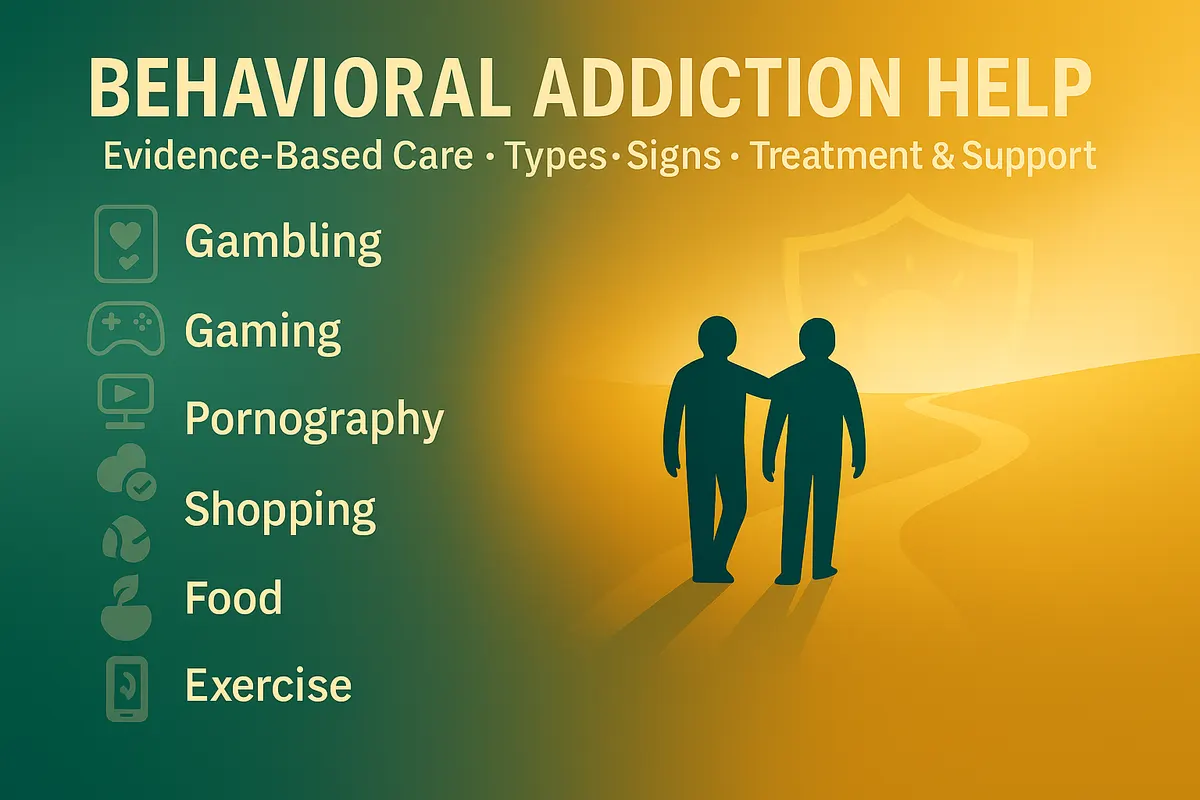
Behavioral addiction is treated, and treated with evidence behind it, even though there is no drug to withdraw from. The pattern is compulsive gambling, gaming, pornography, shopping, eating, exercise or social media use that continues after it starts costing you your health, your money or your relationships.
Clinically it looks like substance addiction, with compulsion, loss of control, craving and persistence despite consequences, and it uses the same reward circuitry. This page covers why these patterns develop, the signs that you or someone close to you needs help, the types, and the care that works.
- What they are
- Compulsive, harmful patterns of activity
- What drives them
- Reward pathways, stress, trauma, genetics, design
- Warning signs
- Loss of control, secrecy, escalation, harm
- Treatment
- CBT, motivational, group and family therapy, IOP
No substance does not mean no addiction, and the treatment is real. Call if the behavior has stopped being a choice.
What is a behavioral (process) addiction?
A behavioral addiction, also called a process addiction, is a pattern of compulsively engaging in a rewarding activity (like gambling, gaming, shopping, sex, pornography, social media, eating, exercise, or work) despite harm to health, relationships, finances, or daily function. The behavior becomes central (“salient”), difficult to control, and often escalates over time. People may feel temporary relief or a “high” while doing it, followed by guilt or regret, yet still feel unable to stop.
Medically, behavioral addictions share features with substance addictions (compulsion, loss of control, craving, and persistence despite consequences) but involve no external drug. Neuroscience research supports overlap in how both categories activate the brain’s reward circuitry (notably dopamine pathways).
DSM‑5 status: The DSM‑5 currently recognizes only gambling disorder in the “non‑substance‑related disorders” section. Other behaviors (e.g., internet gaming, shopping, pornography/sex, social media) are actively studied and can be clinically significant, even if formal diagnostic criteria are still evolving.

Why behavioral addictions develop
Most behaviors that become addictive start as normal, even healthy activities (buying necessities, exercising, enjoying intimacy, relaxing with games). Over time, biological, psychological, and environmental factors can converge so that the behavior becomes an escape, emotion regulator, or identity anchor.
- Brain reward learningStrong, fast rewards (excitement, relief, novelty) pair the behavior with dopamine‑driven reinforcement, increasing salience and habit strength.
- Genetics & temperamentA family history of addiction or certain traits (impulsivity, sensation‑seeking) can raise vulnerability.
- Stress & traumaPeople may use behaviors to numb, distract, or feel in control when coping with stress, trauma, anxiety, or depression.
- Digital design & accessAlgorithms that maximize engagement (endless scroll, variable rewards) can entrench compulsive patterns, especially in gaming, gambling, and social media.
Signs you (or a loved one) may need help
You don’t need every sign to benefit from support. The more boxes you check, the more important it is to speak with a professional:
Spending increasing time on the behavior; thinking about it, planning it, doing it, or recovering from it
Failed attempts to cut back or stop; “I’ll quit after this week” turns into months
Using the behavior to soothe emotions (stress, loneliness, shame, boredom)
Escalation (higher risk, longer sessions, larger bets/purchases) to feel the same effect
Neglecting work, school, sleep, meals, or relationships
Hiding or lying about the behavior; financial secrecy or debt
Emotional withdrawal (irritability, restlessness, anxiety) when you can’t do it
Continuing despite harm: legal, health, financial, or relational consequences
Types of behavioral addictions (with quick indicators
Below are common behavior categories that frequently show up in treatment. Each one can present mildly (problematic use) to severely (addiction).
We accept most major insurance
Most major insurance covers treatment here
We'll check your benefits for free and tell you what you'd actually pay, before you commit to anything.













Takes about 2 minutes · No obligation · Or call (512) 605-2955
Don't see yours? We work with more plans than we can show here.
VERIFY YOUR INSURANCE | 100% CONFIDENTIAL

Self‑check: a 60‑second screen (not a diagnosis)
Answer yes/no:
Have you tried to cut back on the behavior, but can’t keep it up?
Do you hide the extent of the behavior from others?
Do you use it to cope with stress, loneliness, shame, or boredom?
Have you escalated time, risk, or money to get the same effect?
Has it hurt your health, finances, work/school, or relationships?
If you answered “yes” to 2+: Consider talking with a counselor who treats behavioral addictions. If you feel out of control or in crisis, call (512) 605-2955.

Levels of care
- Outpatient therapy (weekly)Best for mild–moderate cases with good supports.
- Intensive Outpatient Program (IOP)9–12+ hours/week; structured groups + individual sessions; strong fit for moderate severity.
- Partial Hospitalization (PHP/Day Program)20–30 hours/week; step‑up care with daily structure.
- Residential Rehab/Inpatient Treatment24/7 environment for safety/structure when behaviors are severe, co‑occurring disorders are complex, or home triggers are overwhelming.
Evidence‑based therapies you’ll see on a high‑quality plan
- Cognitive Behavioral Therapy (CBT)Identify and change thought patterns and triggers; build coping skills; create alternative, values‑aligned behaviors.
- Motivational approaches (MI/MET)Resolve ambivalence, strengthen internal motivation for change, and set practical action steps.
- Group therapy & peer supportReduces shame and isolation; shares strategies that work; provides accountability. (12‑step and non‑12‑step options.)
- Family/couples therapyRebuilds trust, sets healthy boundaries, and addresses enabling or conflict cycles.
- Skills trainingUrge surfing, distress tolerance, habit reversal, stimulus control, problem solving, financial coaching (for gambling/shopping), digital hygiene.
- Medication: No medications are FDA‑approved specifically for most behavioral addictions. Clinicians may treat co‑occurring conditions (e.g., depression, anxiety, ADHD) which can indirectly reduce compulsive behavior. For certain presentations, SSRIs may be considered, guided by individualized assessment.
Dual diagnosis: If a substance use disorder co‑occurs (common), integrate care so both are treated together.
Freedom Starts Here. Take Back Your Life Today.
Same-Day Admissions in Austin Available.
A practical recovery plan (what it looks like week‑to‑week)
3) Skills practice
- CBT toolsthought records, urge logs, “if‑then” plans, values‑based scheduling.
- Digital hygienenotification pruning, grayscale mode, “no‑phone zones,” timeboxed sessions, calendar‑first planning.
- Financial boundariescash envelopes, no‑credit rules, shared visibility with a trusted partner (shopping/gambling).
- Sex/porn recoverystimulus control (filters), sensate focus or intimacy‑building with consent and communication.
You Can Recover: Let’s Begin
At Nova Recovery Center, we recognize that behavioral addictions often occur alongside substance use disorders, and addressing both together is vital for lasting recovery. When behavioral addiction is identified as a secondary diagnosis, our team integrates specialized therapy into the broader treatment plan to ensure no issue is overlooked. We use evidence-based approaches such as Cognitive Behavioral Therapy (CBT), Motivational Interviewing (MI), and group counseling to help clients identify unhealthy patterns and build healthier coping strategies. By treating behavioral addiction in conjunction with substance abuse, we can uncover shared triggers, address underlying trauma, and strengthen emotional resilience. Our comprehensive continuum of care, from residential rehab to intensive outpatient programs and sober living, provides consistent structure and accountability. Family therapy is also available to rebuild trust and set healthy boundaries, which is essential when behaviors like gambling, gaming, or compulsive shopping impact loved ones. In addition, our holistic model supports the mind, body, and spirit, ensuring clients develop balanced lifestyles that reduce relapse risk. With professional guidance, clients learn to manage urges, repair relationships, and focus on long-term personal growth. Nova Recovery Center’s integrated approach ensures that both substance and behavioral addictions are treated with equal care, creating a solid foundation for lifelong recovery.
Get help today. Reach out now to start your path to healing.
FAQ: Behavioral addiction help
What is a behavioral addiction, and how is it different from substance addiction?
It’s compulsive engagement in a rewarding behavior despite harm; it overlaps with substance addiction in brain reward processes but doesn’t involve a drug.
Is behavioral addiction in the DSM‑5?
DSM‑5 currently recognizes gambling disorder; other behaviors are under study and can still warrant treatment when they impair life.
What are common types of behavioral addictions?
Gambling, gaming, pornography/sex, shopping, social media/internet, food/binge eating, exercise, and work.
What are early warning signs I should look for?
Loss of control, secrecy, escalating time/money, using the behavior to cope, and harm to work/school/relationships.
How are behavioral addictions treated?
With therapies like CBT, motivational approaches (MI/MET), group and family therapy; integrate care if a substance use disorder is present.
Are there medications for behavioral addictions?
No FDA‑approved meds specifically for most behavioral addictions; clinicians treat co‑occurring conditions (e.g., depression/anxiety) that may drive compulsion.
Can someone recover without total abstinence?
It depends on the behavior. Some require complete abstinence (e.g., gambling), while others may focus on harm reduction and strict boundaries (e.g., social media, work) under clinical guidance.
What’s the first step if I think I have a behavioral addiction?
Reach out to a licensed therapist or program that treats process addictions, or call 1‑800‑662‑HELP for referrals.
How can family members help without enabling?
Express concern, set clear boundaries, encourage treatment, and consider a professionally guided intervention when needed.
Other Outpatient Drug and Alcohol Rehab Locations
- IOP in Austin
- IOP in San Antonio
- IOP in Colorado Springs
Keep reading
- Behavioral Addictions: Types, Signs, Causes & Evidence‑Based Treatment
- Addiction Treatment: Evidence‑Based Options, Levels of Care, and How to Start
- Addiction Symptoms: How to Recognize the Signs in Yourself or a Loved One
- Addiction Prevention: Evidence‑Based Ways Individuals, Families, and Communities Can Reduce Risk
- Addiction Recovery: An Evidence‑Based Guide to Getting and Staying Well
Talk to someone today
Ready when you are
Admissions are answered 24 hours a day by a person, not a queue. We will check your benefits for free and tell you what treatment would actually cost.
Free and confidential · No obligation