

Drug & Substance Guide
Lithium (Lithium Carbonate): Uses, Dosage, Levels, Side Effects & Interactions
Admissions answered 24 hours a day · Free and confidential
Excellent 4.6 out of 5 434 Google reviews across our locations


What clients say
Trusted by clients across Texas
4.6 from 434 Google reviews across 9 locations
Across Nova Recovery Center, Briarwood Detox Center and Eudaimonia Recovery Homes
★★★★★
“Nova is far from perfect, and some of the information can be misleading. But if you want to cover the 12 Steps while enjoying good food and a beautiful scenic view, this is the place for you. The…”
10 months ago · Wimberley
★★★★★
“I did 90 days at Nova Recovery 6 years ago. I am still sober today. And living a life I could have never imagined. The people and the program they are running impacted me for a lifetime. Better than…”
2 years ago · Wimberley
★★★★★
“I went to Nova almost 9 months ago and I wouldn’t change it for the world. The staff when I first entered were very nice and welcoming. As a 19 year old that didn’t know what I was getting myself…”
2 years ago · Austin
★★★★★
“Nova Recovery Center has been an invaluable part of my journey to sobriety. The intensive inpatient program, coupled with the unwavering support and guidance from my recovery specialist, Mark Rector…”
2 years ago · Austin


★★★★★
“I had such a positive experience at Nova Recovery in Wimberley! The staff genuinely cares and went above and beyond to support me every step of the way. The peaceful setting made it easier to focus…”
a year ago · Wimberley
★★★★★
“I love Nova so freaking much. Nova has saved my life in more ways than one. I was hopeless and had no solution suffering from this disease. The staff there never gave up on me. I was the worst client…”
2 years ago · Austin
★★★★★
“I know Mark rector is non-binary however it saved my life and it did a good job with CPR and I don't know how aside from staying sober I could ever repay it thank you Mr or Mrs or whatever you're…”
8 months ago · Austin
★★★★★
“It's been a few years since I was a patient at Nova Recovery Center. Recently I have been reflecting on my time there and how incredibly grateful I am for the experience I had. I have been to 7 rehab…”
2 years ago · Austin


Exceptional standards, backed by credible organizations
Our affiliations and accreditations

Lithium (Lithium Carbonate) Overview at a Glance
What lithium is
Lithium is a mood stabilizer for bipolar disorder, used both to treat acute mania and to prevent future mood episodes, and sometimes added to an antidepressant.
What makes it different from most medications is the monitoring: the therapeutic window is narrow, so blood levels are checked 12 hours after the last dose, with maintenance usually held at 0.6 to 0.8 mmol/L and acute mania sometimes needing 0.8 to 1.0 or above. This page covers the dosing, the side effects, the warning signs of lithium toxicity, and the drugs and conditions that interact with it.
- What it is
- A prescription mood stabilizer
- Primary use
- Acute manic and mixed episodes in bipolar disorder
- Forms
- Carbonate tablets, extended-release, citrate solution
- Secondary use
- Augmenting antidepressants, in select cases
Lithium is not a drug of abuse, but it is often prescribed alongside a substance problem. That overlap is what we treat.

How lithium works
Scientists don’t have a single tidy explanation, but lithium appears to stabilize mood circuitry by modulating several brain signaling systems (e.g., second‑messenger pathways, GSK‑3 activity) and likely promotes neuroplasticity over time. The practical takeaway: it reduces extremes, dampening manic energy while providing resilience against mood swings.
When will I notice a difference? For mania, improvements might be seen over days to a couple of weeks; for relapse prevention or depression augmentation, benefits often emerge over weeks and grow with consistent dosing and therapeutic blood levels.








Who is lithium for, and who should avoid it?

Appropriate candidates
Adults and adolescents (age thresholds vary by formulation) with bipolar I or II disorder who need control of mania/mixed episodes and long‑term mood stabilization.
Individuals with recurrent severe depression where lithium augmentation is considered, under specialist care.

Use with caution or avoid unless benefits outweigh risks
Kidney disease or significantly reduced renal function (lithium is renally cleared).
Untreated thyroid disease (hypothyroidism risk rises on lithium; it can be treated if needed).
Pregnancy or breastfeeding: requires individualized risk/benefit counseling and close monitoring.
People taking NSAIDs, ACE inhibitors/ARBs, or thiazide diuretics that can raise lithium levels and provoke toxicity.
Never start, stop, or adjust lithium without your prescriber’s guidance.
Forms, dosing & how to take it
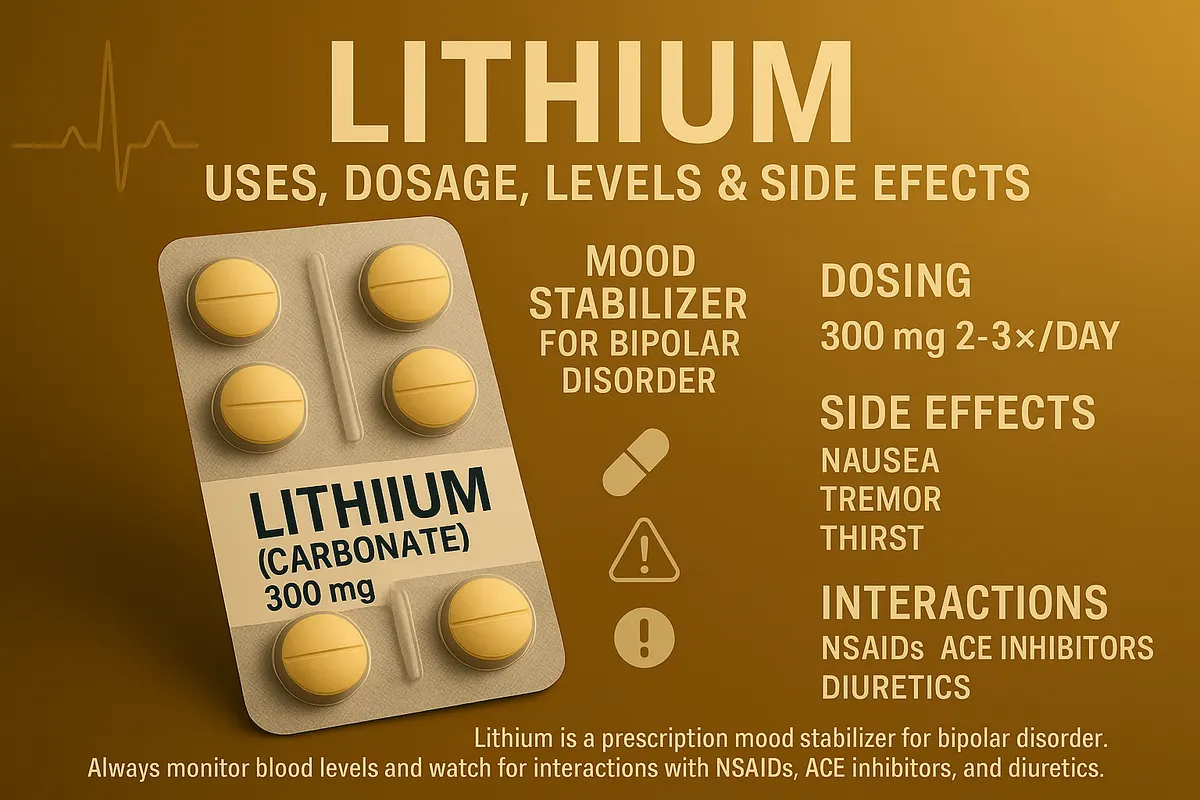
Lithium is available as immediate‑release tablets/capsules, extended‑release tablets (often taken 1–2×/day), and oral solution. Your prescriber chooses a starting dose and then titrates based on how you feel and your 12‑hour blood level. Take lithium consistently (same times each day), with food if it upsets your stomach, and don’t crush extended‑release tablets.
Important: Doses vary widely between people. The most meaningful “dose” is your serum level, not the milligrams. Always follow your prescriber’s plan.
Side effects: what’s common, what’s serious, and what helps
We accept most major insurance
Most major insurance covers treatment here
We'll check your benefits for free and tell you what you'd actually pay, before you commit to anything.
















Takes about 2 minutes · No obligation · Or call (512) 605-2955
Don't see yours? We work with more plans than we can show here.
VERIFY YOUR INSURANCE | 100% CONFIDENTIAL

Toxicity & overdose: what to know
Lithium toxicity can be life‑threatening. Acute toxicity often shows GI symptoms (vomiting, diarrhea), while chronic toxicity presents more neurologic symptoms (worsening tremor, confusion, ataxia). Severe cases can affect the kidneys and the heart. If toxicity is suspected, urgent evaluation is required; treatment ranges from stopping the drug and fluids to hemodialysis in severe cases.
Prevention tips: avoid dehydration, be cautious in hot weather, don’t start NSAIDs without checking, and keep lab appointments.
Special situations

Pregnancy & postpartum
Lithium carries specific pregnancy risks, including a small increased risk of certain congenital heart defects with first‑trimester exposure; modern estimates are lower than older reports, but a careful, shared decision is essential. For some individuals, the risk of severe relapse (particularly postpartum mania) makes continued lithium, with close maternal‑fetal monitoring, the best option. Never start or stop in pregnancy without specialist input.
Freedom Starts Here. Take Back Your Life Today.
Same-Day Admissions in Austin Available.
Alternatives & comparisons
Some people cannot take lithium or prefer another option. Depending on your diagnosis and health profile, alternatives may include valproate, lamotrigine, or atypical antipsychotics, sometimes in combination with psychotherapy and lifestyle strategies. Your prescriber will match benefits and risks to your situation.
Caution about “OTC lithium”: Products like lithium orotate are dietary supplements, not FDA‑approved treatments for bipolar disorder. Do not substitute them for prescription lithium. (Discuss any supplement use with your clinician.)

Practical tips for daily life
Hydrate regularly, especially in heat, exercise, or illness; replace fluids if you’ve had vomiting/diarrhea.
Keep salt intake consistent (don’t suddenly adopt a very low‑salt diet).
Prefer acetaminophen for aches unless your prescriber clears an NSAID.
Take doses on schedule; use reminders or pill organizers.
Bring a medication list to every appointment; show it to your dentist, too.
Plan for travel: carry extra tablets, keep a note with your dose and prescriber contact, and avoid dehydration on flights.
Frequently Asked Questions About Lithium Medication, Side Effects, Dosage, and Blood Levels
What does lithium medication do?
Lithium works as a mood stabilizer, helping manage acute mania and prevent relapses in people with bipolar disorder. It may also be used as an add-on for depression.
Why is lithium not prescribed anymore?
Lithium is still prescribed, but less frequently than in the past because it requires regular blood monitoring, has a narrow therapeutic range, and some doctors choose newer medications.
What is the biggest side effect of lithium?
The most concerning side effect is the potential for toxicity, especially at high levels. Common side effects include nausea, tremor, thirst, and increased urination.
Is lithium a high-risk medication?
Yes. Lithium is considered high-risk because small changes in dose or hydration can push levels into the toxic range, which can be dangerous.
What are the side effects of taking lithium?
Side effects may include nausea, diarrhea, tremors, fatigue, thirst, frequent urination, weight gain, and thyroid or kidney issues with long-term use.
What are three signs of lithium toxicity?
Common toxicity signs are confusion, worsening tremors, and severe diarrhea/vomiting. These require immediate medical care.
Can lithium cause tinnitus?
Yes, tinnitus (ringing in the ears) is a possible but less common side effect of lithium treatment.
What does lithium do to someone without bipolar?
In someone without bipolar disorder, lithium generally does not elevate mood but may cause side effects like fatigue, tremor, or cognitive dulling.
What is lithium carbonate mainly used for?
Lithium carbonate is mainly prescribed for bipolar disorder, treating acute mania and preventing mood swings.
Is lithium carbonate an antipsychotic?
No. Lithium is not an antipsychotic. It is a mood stabilizer, though it is often combined with antipsychotics in treatment plans.
Is lithium hard to get off of?
Lithium is not addictive and does not cause cravings or a high, so coming off it is not a withdrawal problem in the usual sense. The risk the page names is different: stopping can let a mood episode come back. That is why it says to taper slowly over weeks or months if you and your clinician decide to stop, and not to stop abruptly unless you have been told to for safety reasons. Many people stay on it for years because it prevents relapses.

How Nova Recovery Center Supports Safe Recovery From Lithium Addiction and Abuse
At Nova Recovery Center, we recognize that while lithium is a valuable treatment for bipolar disorder and mood stabilization, misuse or overuse can lead to serious health risks and dependence-like patterns of abuse. Our team provides a safe, supportive environment where individuals struggling with lithium misuse can begin the healing process under close medical supervision. We offer comprehensive assessments to understand the role lithium has played in each client’s life and to identify any co-occurring mental health conditions. Our evidence-based detox for drugs and alcohol and drug and alcohol rehab programs are designed to manage withdrawal symptoms, restore physical health, and address the underlying issues that contribute to medication misuse. Through a combination of individual counseling, group therapy, relapse prevention education, and holistic practices, clients gain the tools they need for long-term stability. We also emphasize education about safer alternatives and strategies for maintaining mental wellness without relying on harmful patterns of lithium use. At Nova Recovery Center, our goal is not just to help clients stop abusing medication but to empower them to rebuild balanced, fulfilling lives in recovery. Whether it’s through our inpatient or outpatient rehab levels of care, our experienced staff walks alongside each person every step of the way.
Get help today. Reach out now to start your path to healing.
Discover More About Mood Stabilizers
Everything You Need to Know...
Other Outpatient Drug and Alcohol Rehab Locations
Talk to someone today
Ready when you are
Admissions are answered 24 hours a day by a person, not a queue. We will check your benefits for free and tell you what treatment would actually cost.
Free and confidential · No obligation